Smart Wasp Intelligent Technology (Suzhou) Co., Ltd.
- +86 0512 8781 7868
- export@smartwasp.com



Smart Wasp Intelligent Technology (Suzhou) Co., Ltd.
Choosing the right Pallet Wrapping Machine is not simply a matter of comparing machine prices or wrapping speeds. For manufacturers, warehouses, distribution centers, and logistics operations, the correct machine should match the pallet load, required throughput, automation level, and long-term operating cost.
A machine that is too basic may create a bottleneck as production grows, while an oversized automatic system may add unnecessary investment and maintenance costs.
Before purchasing a pallet wrapper, buyers should evaluate four key factors.
There are various types of pallet wrapping machines, each suited for different applications. The main categories include:
Manual Wrappers: These are ideal for low-volume operations and require manual labor to wrap the pallet. They are cost-effective but less efficient for high-volume requirements.
Semi-Automatic Wrappers: These machines require some manual intervention but automate the wrapping process, increasing efficiency and consistency. They are suitable for medium-volume operations.
Automatic Wrappers: Fully automated machines are designed for high-volume operations. They require minimal human intervention and offer the highest efficiency and consistency in wrapping.
Consider your volume of operations and level of automation needed when selecting the type of pallet wrapping machine.

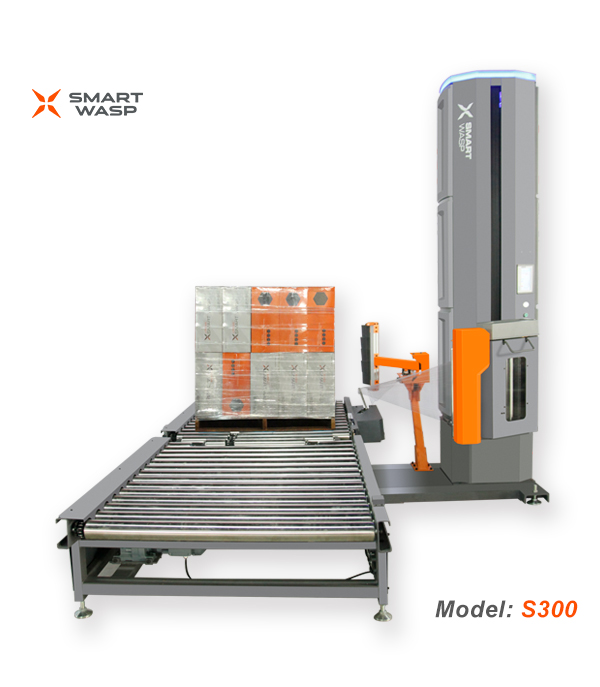
Newest X0ps 3 Years Warranty Pre Stretch Wrapping Machine
The first consideration is the physical condition of the pallet load.
Before selecting a machine, buyers should provide the supplier with accurate information including:
Pallet length and width
Minimum and maximum load height
Maximum pallet weight
Product type
Load stability
Whether pallets are uniform or variable
Whether loads are oversized or irregular
These factors directly influence which type of Pallet Wrapping Machine is suitable.
A Turntable Pallet Wrapping Machine rotates the pallet while the stretch film carriage moves vertically.
This type of machine is generally suitable for stable, standard-sized pallet loads.
Typical applications include:
Cartons
Bottled products
Bagged products
Consumer goods
Standard warehouse pallets
However, if the load is lightweight, unstable, very tall, or difficult to rotate, a turntable system may not be the best choice.
A rotary arm wrapper keeps the pallet stationary while the wrapping arm rotates around the load.
This design can be more suitable for:
Heavy pallets
Unstable loads
Lightweight products
Tall loads
Loads that should not rotate during wrapping
A Robot Pallet Wrapping Machine moves around a stationary pallet.
This can be useful where pallet sizes vary significantly or where operators need to wrap loads in different locations within a warehouse.
The correct machine type should therefore be selected based on the load itself, rather than simply choosing the most common machine on the market.
The type of film and its stretch capability are essential factors in achieving optimal load stability and cost-efficiency. Common film types include:
Cast Film: Known for its clarity and quiet unwinding, suitable for applications requiring high clarity for barcode scanning.
Blown Film: Offers superior strength and puncture resistance, ideal for heavy or irregular loads.
Also, consider the stretch capability of the film. Machines with pre-stretch capabilities can significantly reduce film usage, lowering costs and improving load stability. Ensure the machine is compatible with the type of film you intend to use and can maximize its stretch potential.
Efficiency and additional features are critical in choosing the right pallet wrapping machine. Look for features that enhance operational efficiency, such as:
Turntable Speed: Faster turntable speeds can increase wrapping speed, improving overall throughput.
Film Carriage System: A good film carriage system ensures consistent film application and can include options for automatic film cutting and attachment.
Programmable Settings: Machines with programmable settings allow you to customize wrap patterns and tension, ensuring optimal wrapping for different load types.
Evaluate the machine’s ease of use, maintenance requirements, and any additional features that can streamline your operations and improve productivity.

The second major consideration is production capacity.
A company wrapping 10 pallets per hour has very different requirements from a production line processing 60 or more pallets per hour.
Before purchasing a machine, calculate:
Current pallets per hour
Peak production demand
Expected future capacity
Number of shifts per day
Required operator involvement
A semi-automatic machine usually requires an operator to:
Place the pallet on or beside the wrapping machine.
Attach the stretch film.
Start the wrapping cycle.
Cut or secure the film after wrapping.
For lower-volume operations, this may provide an economical and practical solution.
A Fully Automatic Pallet Wrapping Machine can automatically manage more of the wrapping process.
Depending on the configuration, automatic functions may include:
Pallet infeed
Film attachment
Automatic wrapping
Film cutting
Film clamping
Film sealing
Pallet discharge
An Automatic Pallet Wrapping Machine is particularly suitable for production lines where pallets move continuously from palletizing to wrapping and downstream logistics.
For high-volume manufacturing, an Inline Pallet Wrapper can be integrated directly into the end-of-line packaging process.
The system may communicate with:
Palletizers
Conveyor systems
Strapping machines
Top sheet dispensers
Labeling equipment
Warehouse handling systems
When calculating capacity, buyers should not only consider the maximum machine speed.
The actual production rate also depends on pallet dimensions, wrapping program, number of top and bottom wraps, film carriage speed, conveyor movement, and communication with upstream equipment.
For this reason, expected pallets per hour should always be discussed with the machine supplier before final equipment selection.
Different machine structures are suitable for different operating conditions.
| Machine Type | Typical Application | Main Advantage |
|---|---|---|
| Turntable Pallet Wrapper | Stable standard pallets | Simple and widely applicable |
| Rotary Arm Wrapper | Heavy or unstable loads | Pallet remains stationary |
| Robot Pallet Wrapper | Variable or oversized pallets | Flexible wrapping locations |
| Automatic Inline Wrapper | Continuous production lines | Minimal operator intervention |
| Ring Type Wrapper | High-throughput applications | High-speed wrapping potential |
There is no universally “best” pallet wrapper.
The best machine is the one that matches the customer's actual pallet characteristics, production capacity, factory layout, and packaging objective.
Q: How do I determine the right level of automation for my pallet wrapping machine?
A: Assess your operation’s volume and labor resources. For low-volume operations, manual or semi-automatic machines may suffice. High-volume operations typically benefit from fully automatic machines, which offer greater efficiency and consistency.
Q: Can I use different types of stretch film with the same machine?
A: Many modern pallet wrapping machines are compatible with various types of stretch film. However, always check the machine’s specifications to ensure compatibility and optimal performance with your chosen film type.
Q: What safety features should I look for in a pallet wrapping machine?
A: Key safety features include emergency stop buttons, safety guards, and load sensors. These features help prevent accidents and ensure the safety of operators during the wrapping process.
Q: How often should I maintain my pallet wrapping machine?
A: Regular maintenance is crucial for ensuring the longevity and reliability of your machine. Follow the manufacturer’s maintenance schedule and guidelines, which typically include routine checks, lubrication, and part replacements as needed.
Choosing the right pallet wrapping machine involves careful consideration of your specific needs, including the type of machine, load size and weight, film type and stretch capability, and operational efficiency. By evaluating these factors, you can select a machine that enhances your packaging process, improves productivity, and ensures the secure delivery of your products.
Smart Wasp Intelligent Technology(Suzhou)Co.,Ltd. focuses on designing, researching and manufacturing intelligent pallet wrapping machine and providing packaging automation solutions. Smart Wasp has a professional design and development team.
If you would like to talk to us about your pallet wrapping machines requirements, contact us today.


Recommend Products: