Smart Wasp Intelligent Technology (Suzhou) Co., Ltd.
- +86 0512 8781 7868
- export@smartwasp.com



Smart Wasp Intelligent Technology (Suzhou) Co., Ltd.
Choosing the right stretch wrap is not only a film purchasing decision. For warehouses, factories, logistics centers and export packaging lines, stretch wrap thickness and film type directly affect pallet stability, film consumption, packaging cost and machine wrapping performance.
Stretch film is commonly used to secure pallet loads during storage and transportation. Different film types, thicknesses and machine settings can change how tightly the load is wrapped, how much film is used and how well the pallet resists shifting during handling. Automatic and semi-automatic stretch wrapping machines are widely used because they can apply film tension more consistently than manual wrapping.
For packaging machine buyers, understanding stretch wrap thicknesses and types helps choose the right pallet wrapping machine, film carriage system and wrapping program for different products.
Most companies that manufacture, resell or warehouse products are familiar with stretch film. It is used around the world to preserve and protect products. How does stretch film protect and stabilize these products? What can be done to more effectively stabilize loads and packages? In this article, we will answer these questions and provide tips and tricks to maximize efficiency and minimize costs when using stretch wrap machines.

Stretch wrap thickness affects puncture resistance, load holding force, film consumption and packaging cost. A thinner film may reduce material cost, but it may not be suitable for sharp edges, heavy pallets or irregular loads. A thicker film may provide stronger protection, but it can increase packaging cost if the load does not require it.
For machine wrapping, film thickness should be selected together with machine settings such as pre-stretch ratio, wrap force, turntable speed, film overlap and top/bottom wrap cycles. Containment force is commonly understood as the combined holding effect of wrap force and the number of film layers applied to the load.
Stretch wrap thickness is often described by gauge, mil or micron. As a general reference, 80 gauge is equal to about 0.80 mil or approximately 20 microns, while 120 gauge is about 1.20 mil or approximately 30 microns. Exact film performance can vary depending on resin, manufacturing process and film formulation.
| Film Thickness | Approx. Micron | Typical Use |
|---|---|---|
| 47–50 gauge | 12–13 microns | Light cartons, uniform loads, cost-saving applications |
| 60–63 gauge | 15–16 microns | Standard light-to-medium pallets |
| 70–80 gauge | 18–20 microns | General pallet wrapping and warehouse use |
| 90–100 gauge | 23–25 microns | Heavier loads or pallets with moderate edges |
| 120 gauge | 30 microns | Heavy-duty machine wrapping |
| 150 gauge | 38 microns | Very heavy, irregular or demanding pallet loads |
These ranges are only a selection guide. The final choice should be tested with real pallet loads, film type and wrapping machine settings.

Stretch film is made from lldpe (linear low density polyethylene). lldpe is found in a variety of products from garbage bags to toys and containers. Because of the flexibility it offers, it is the ideal plastic for these products.
The two basic types of stretch films are cast stretch films and blown stretch films. They are both made from LLDPE, but they are manufactured in different processes.
Blown stretch film uses air in the manufacturing process. Air is blown into the film and used to cool the film. Blown stretch films are more expensive to produce, but do offer better tear and puncture resistance.
Cast stretch films use rollers to cool the film during the production process. Cast stretch films are more affordable than blown films and are suitable for most applications.
Hand stretch film is used for manual wrapping. It is suitable for low-volume packaging, small warehouses and temporary packing operations. However, manual wrapping can create inconsistent tension and uneven film usage.
For companies with growing pallet volume, switching from hand film to a semi-automatic pallet wrapping machine can improve wrapping consistency, reduce labor intensity and control film consumption.
Machine stretch film is designed for use with stretch wrapping machines. It is usually stronger and more consistent than hand film, making it suitable for semi-automatic and fully automatic pallet wrapping systems.
Machine stretch film works with film carriage systems, pre-stretch rollers and tension control systems. For high-volume packaging lines, machine film helps improve wrapping speed, load stability and packaging standardization.
Pre-stretch film is stretched during production before it reaches the user. It requires less force during wrapping and can help reduce operator fatigue in manual use or reduce film consumption in machine applications.
For automatic stretch wrapping machines, pre-stretch performance is also related to the machine film carriage. A high-quality pre-stretch carriage can stretch machine film before it is applied to the pallet, helping reduce film usage while maintaining load containment.
Colored stretch film is used for pallet identification, inventory management, product classification and brand differentiation. It can help warehouses quickly identify product categories, shipping batches or customer orders.
UV stretch film is suitable for outdoor storage or products exposed to sunlight. It helps protect pallet loads from sunlight-related film degradation for a certain period, depending on film formulation and storage conditions.
Vented stretch film has holes or ventilation openings. It is used for products that need airflow, such as fresh produce, frozen goods, beverages, plants and temperature-sensitive products.
Anti-static stretch film is used for electronic products or environments where static control is important. It helps reduce static-related packaging problems during handling and storage.

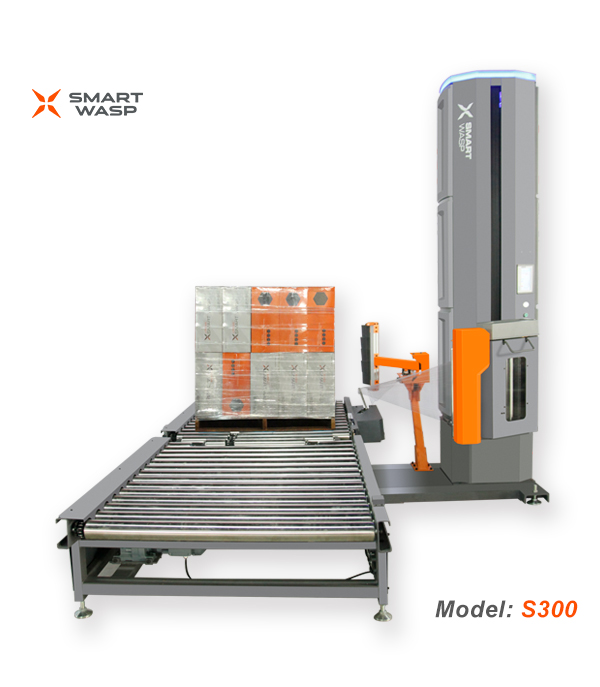
Intelligent Basic Pallet Wrapping Machine
Because LLDPE is a petroleum-based product, stretch film manufacturers have taken significant steps to reduce costs. Many of the new films on the market are excellent options for reducing costs, but are still safe for loads. Manufacturers are producing thinner, stronger, lower cost, higher volume films.
Because the new film is thinner, it tends to sacrifice puncture resistance. It is ideal for boxes and crates that do not have sharp corners. When packaging pallets and individual products with sharp corners, they can easily tear and rip during shipping.
The new cost-saving stretch film is stronger and stiffer than traditionally measured stretch films. This stiffness reduces the amount of stretch in the film. This reduced stretchability does help reduce the physical effort involved in applying the film, but it does reduce tear resistance.

Light and uniform pallets can often use thinner stretch film. Heavy pallets usually require stronger film, more layers or higher containment force.
Uniform carton pallets are easier to wrap than irregular products. Sharp corners, metal parts, bags, buckets and unstable loads may require thicker film or stronger puncture resistance.
Long-distance shipping, export pallets and mixed handling environments may require stronger film and more stable wrapping patterns.
High-speed automatic packaging lines usually require machine stretch film with stable quality. Film breaks can reduce packaging efficiency and increase downtime.
The film must match the pallet wrapping machine. Important factors include film width, roll diameter, core size, pre-stretch ratio, film carriage type and tension control system.
| Packaging Need | Recommended Machine Type | Film Suggestion |
| Low-volume pallet wrapping | Semi-automatic turntable wrapper | Standard machine stretch film |
| High-volume warehouse packaging | Automatic pallet wrapping machine | Machine stretch film with pre-stretch |
| Unstable or light products | Rotary arm stretch wrapper | Good cling film with controlled wrap force |
| Heavy pallets | Heavy-duty pallet wrapping machine | 90–120 gauge or stronger machine film |
| Irregular loads | Rotary arm or automatic wrapper with tension control | Blown film or puncture-resistant film |
| Food or produce pallets | Automatic wrapper | Vented stretch film |
| Outdoor storage | Pallet wrapper | UV stretch film |
| Export pallet packaging | Automatic stretch wrapping line | Strong machine film with tested containment force |
There are a variety of stretch film products on the market today. They all have advantages and disadvantages. The two elements to consider when asking how stretch film works are stretchability and puncture resistance. If you have any questions or would like to discuss the products we offer, please call us. SMARTWASP will provide you with a unique solution.

Recommend Products: