Smart Wasp Intelligent Technology (Suzhou) Co., Ltd.
- +86 0512 8781 7868
- export@smartwasp.com



Smart Wasp Intelligent Technology (Suzhou) Co., Ltd.

Find here details of Wrapping Machine on our website. Today we would like to talk about how to break through the development of automatic packaging machine.
With rising labor costs, increasing customization demand, and stricter quality standards, automatic packaging machines are facing both unprecedented opportunities and structural challenges. Traditional equipment upgrades are no longer sufficient. Real breakthroughs require system-level innovation across technology, intelligence, and application scenarios.
This article analyzes how automatic packaging machine manufacturers can break through development bottlenecks and achieve sustainable growth.
The overall level of domestic automatic packaging machines is still in the low paper stage, and the packaging machines with higher automation still rely on foreign imports to meet domestic demand. This phenomenon of excessive dependence has seriously restricted the sustained and stable development of China's packaging industry, and has also made some uncompetitive packaging machinery enterprises in China in an endangered situation. Therefore, experts pointed out that the low level of development of packaging machinery will affect the rapid development of the entire packaging industry, so efforts must be made to change its backwardness.
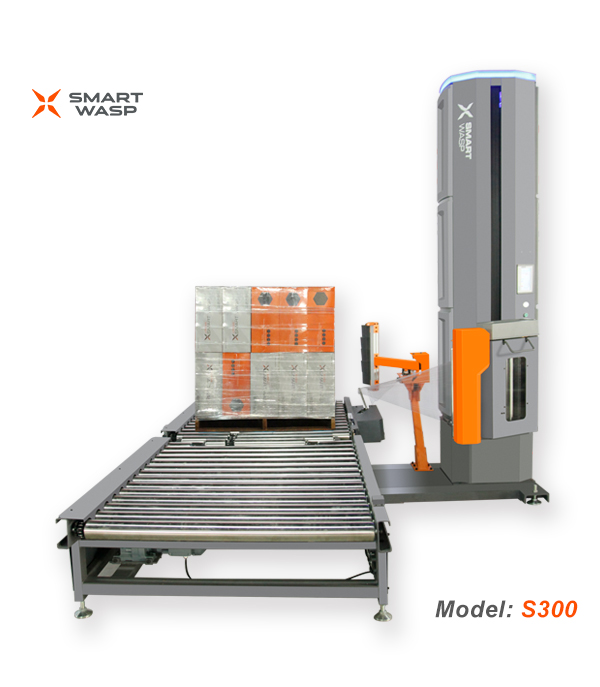
Despite the broad prospects of the domestic packaging machinery market, problems such as single-machine automation, poor stability and reliability, unsightly appearance and short life span have also caused domestic packaging machinery products to suffer from criticism. The following are some points shared by Pallet Wrapping Machine Manufacturers.
Conventional automatic packaging machines focus on mechanical automation. Future competitiveness lies in intelligent control systems, including:
PLC + Industrial PC integration
Real-time data acquisition
Adaptive parameter adjustment
Smart packaging machines can self-diagnose faults, optimize packaging speed, and reduce downtime.
Machine vision systems enable:
Automatic material identification
Defect detection and rejection
Accurate positioning and alignment
This significantly improves packaging accuracy and consistency, especially for food, pharmaceuticals, and cosmetics.

End users increasingly demand small-batch, multi-specification production. Modular design allows:
Fast format changeovers
Flexible function expansion
Reduced customization cost
A modular automatic packaging machine can adapt to different:
Bag types
Product sizes
Filling methods
Manufacturers should develop standardized core platforms, then customize modules for specific industries such as:
Food packaging
Pharmaceutical packaging
Chemical and daily-use products
Advanced servo systems provide:
Higher speed stability
More precise filling and sealing
Lower mechanical wear
This is essential for high-speed automatic packaging lines.
Breakthroughs should focus on:
Accurate weighing and dosing
Stable sealing under variable conditions
Consistent package appearance
Precision directly determines product quality and customer satisfaction.
Modern automatic packaging machines should support:
Production data tracking
Remote monitoring
Predictive maintenance
This aligns packaging equipment with Industry 4.0 and smart factory systems.
Seamless integration with factory management systems helps users:
Improve production transparency
Reduce waste
Optimize resource allocation
Key requirements:
Hygienic design
CIP/SIP compatibility
Compliance with food safety standards
Focus areas:
High precision and traceability
GMP-compliant materials
Validation-ready design
Challenges include:
Corrosion resistance
Dust control
Explosion-proof design
Customized solutions based on industry pain points are critical for differentiation.
Sustainability is no longer optional. Breakthrough strategies include:
Energy-saving servo motors
Lightweight mechanical structures
Compatibility with recyclable packaging materials
Green packaging solutions enhance both regulatory compliance and brand value.
Future leaders in automatic packaging machines will evolve from:
Single-machine manufacturers → Integrated packaging solution providers
This includes:
Packaging line design
Process optimization
After-sales technical support
Remote service capabilities
Safety detection technology: Safety is the first keyword in any industry, especially for automatic packaging machines. The food safety on the packaging machine is not limited to the scope of simple physical parameters, but also the packaging of food and other factors. The range of packaging machinery applications is expanding, which continues to place new demands on machinery manufacturers and automation product suppliers.
Motion control technology: The development of motion control technology in China is very rapid, but the development momentum in the packaging machinery industry seems to be weak. The role of motion control products and technologies on the packaging machine is mainly to achieve precise position control and strict speed synchronization requirements, mainly for the positioning, conveying, grabbing, packing and other processes of the carton and products. Motion control technology is one of the key factors distinguishing high, medium and low-end packaging machinery, and it is also the technical support for the upgrading of China's packaging machinery.
Flexible production: In order to adapt to the fierce competition in the market, the major enterprises are getting shorter and shorter. It is understood that the production of cosmetics can generally be changed in three years, even in a quarter, and the production volume is relatively large, so the flexibility and flexibility of the packaging machinery are very high: therefore, the life of the packaging machine It is much larger than the life cycle of the product. Only in this way can we meet the economic requirements of product production. The concept of flexibility should be considered in three ways: the flexibility of the quantity, the flexibility of the construction, and the flexibility of the supply.
To break through the development bottleneck of automatic packaging machines, we will focus on intelligence, modularization, precision, digitalization, and industry specialization.
Only by shifting from mechanical innovation to system innovation can automatic packaging machines achieve long-term competitiveness in the global market.
If you need any information about Pallet Wrapping Machine, feel free to contact us.

Recommend Products: